
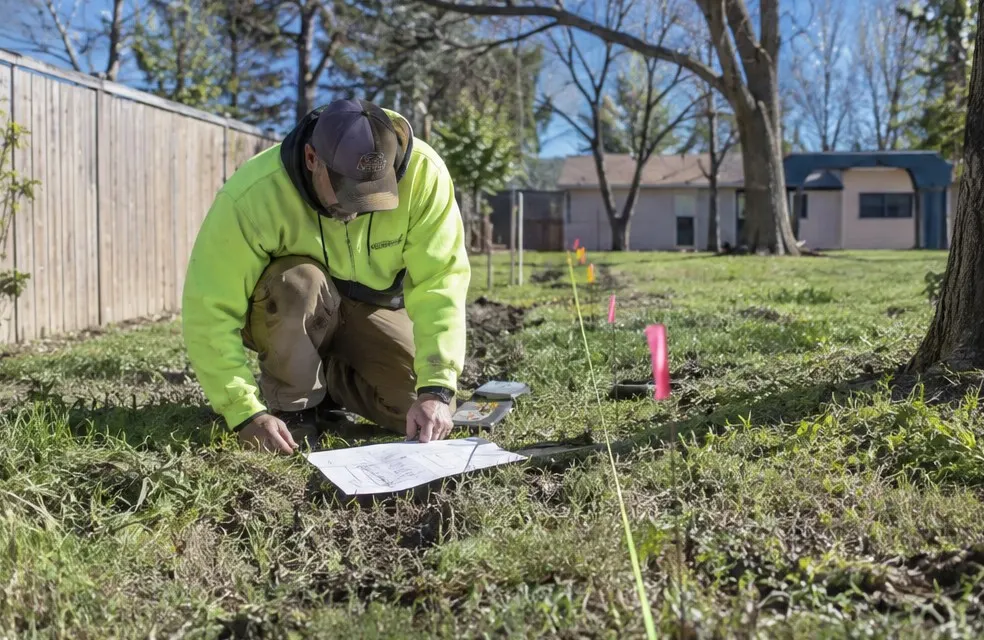
The fastest way for a fence company to lose money is to build a fence in the wrong place. Tearing out 150 feet of new wood privacy because it sits two feet over the neighbor's line costs more than the job paid. Here is the checklist that keeps you legal, on schedule and out of disputes.
1. Who is responsible for the property line
Make it clear in writing: the homeowner is responsible for knowing where their property line is. You build where they tell you, based on the pins or the survey they show you. Put this sentence in every quote and contract. It does not replace care on your part, but it sets the expectation.
2. Find the property pins or the survey
- Survey pins are metal rods driven at the corners of the lot. A metal detector finds most of them in a few minutes
- A plat or survey from the closing documents shows the lot lines and easements
- When in doubt, recommend a survey. A boundary survey often costs $400 to $1,000. That is cheap next to a lawsuit over a fence
Many contractors build a few inches inside the line to leave room for error and for maintenance. Explain why to the customer.
3. Check the permit rules
Rules vary by city and county. Common ones:
- A permit is required for most new fences in many towns, sometimes even for replacements
- Height limits: often 6 ft in back and side yards and 3 to 4 ft in front yards
- Setbacks from sidewalks, streets and corners so drivers can see
- Good side out: some towns require the finished side to face the neighbor or the street
- Fees usually run $25 to $150 for a residential fence
Decide who pulls the permit and write it in the quote. Many fence companies pull it themselves and include the fee, because a homeowner who forgets delays your schedule.
4. Call 811 before every job
Almost every state requires a call to 811 a few business days before you dig. The utilities mark their lines for free. Hitting a gas, electric or fiber line is dangerous and expensive, and skipping the call can make you liable. Remember:
- 811 marks public utility lines, not private ones. Sprinkler lines, invisible dog fences, landscape lighting and private gas lines to a pool heater or grill are not marked. Ask the homeowner where they are
- Keep the ticket number with the job
5. Read the HOA rules
If the home is in an HOA, ask for the architectural guidelines before you quote. Many HOAs set the height, the material, the color and the style, and require approval before work starts. An HOA that rejects a finished fence can force the homeowner to remove it, and you will hear about it.
6. Pool barrier codes
A fence around a pool is a safety barrier, and most codes are strict:
- Usually at least 4 ft tall, often with no gaps a child can climb or slip through
- Self-closing, self-latching gates that open away from the pool, with the latch high enough
- Inspection before the pool is filled or used
Price self-closing pool gate hardware as its own line (about $150) so the customer understands why.
7. Shared fences and neighbors
If the fence is on or near the line, the neighbor will notice. Encourage the homeowner to tell the neighbor before work starts. Some neighbors split the cost. Some object. Either way, it is better to know before the posts are in.
8. Build the steps into your schedule
Permits and locates add days, sometimes weeks. Put them on the job timeline from the start:
- Quote signed and deposit paid
- Permit submitted, HOA approval if needed
- 811 called, material ordered
- Install date confirmed with a reminder the day before
- Final walk, balance invoice, review request
Scheduling software that reminds the customer and moves the install in one tap when the permit runs late keeps them calm.
Put it on your website
A short page that explains permits, 811 and property lines makes you look like the professional in the room. Homeowners searching "do I need a permit for a fence" find you before they find anyone else. FencePilot writes posts like that for your site every month.
Frequently asked questions
Who is responsible for the property line when installing a fence?
The homeowner is responsible for knowing the line. The contractor builds where the owner shows, based on pins or a survey. Put that in writing and recommend a survey when the line is unclear.
Do I need to call 811 before installing a fence?
Yes, in almost every state, a few business days before digging. 811 marks public utility lines only, so ask the homeowner about sprinklers, private gas lines and invisible dog fences.